
Verification guide – updated 24 September 2026
Zoome KYC and Verification: Documents, Triggers and Withdrawal Checks
 Available in AU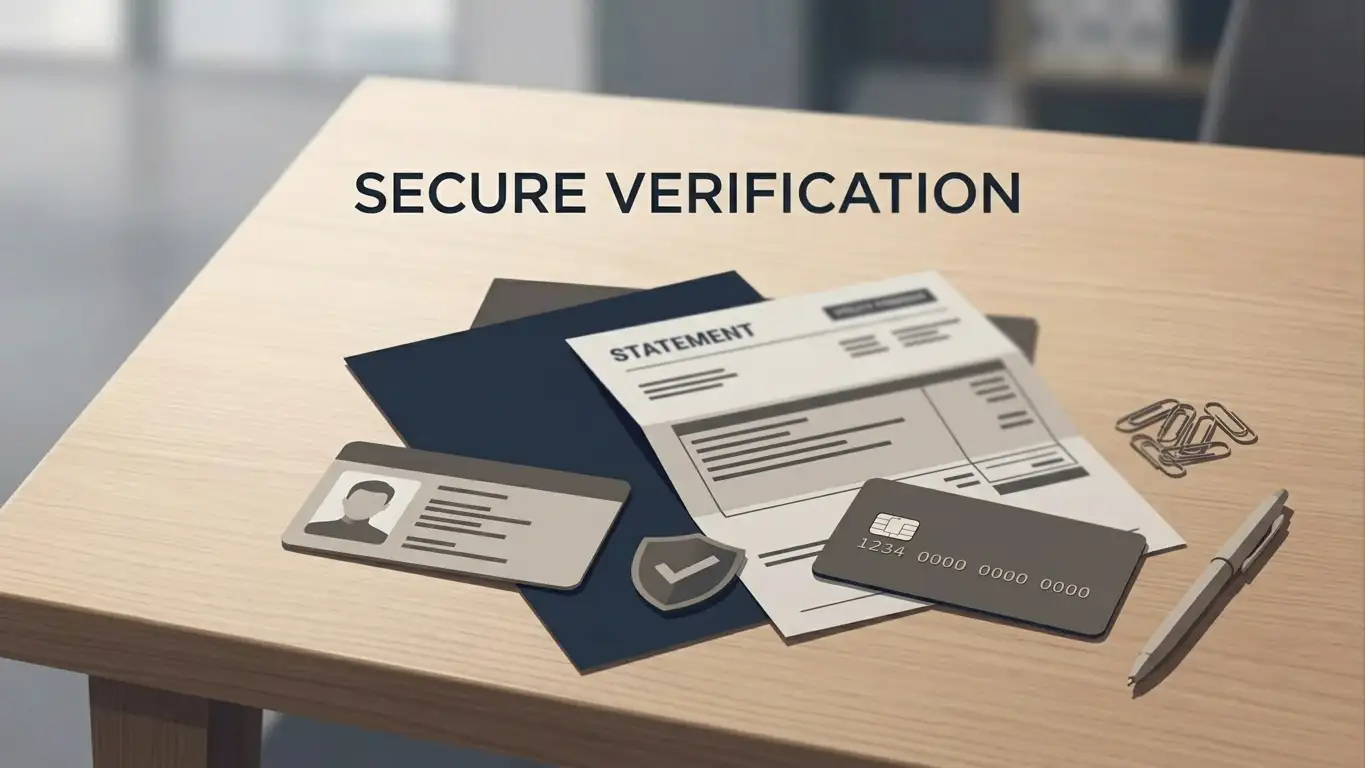
Zoome’s current Terms say identity verification can be requested as part of account checks and before withdrawals are processed. The published document categories include a government-issued photo ID, proof of current address and, when requested, evidence that a payment method belongs to the account holder. The Terms also allow additional documents and phone or video verification in some circumstances. They do not publish one universal KYC processing time, so this guide does not promise a fixed number of hours or days.
For Australian readers, the practical issue is not whether KYC exists but when it can interrupt access to funds and what evidence should already be consistent with the account. Verification is connected to identity, account ownership and payment ownership. It is not a separate optional feature that only appears after a problem.
Current document categories
Table of Contents
- What Zoome’s current Terms say it can request for KYC
- KYC can be triggered by account checks, age checks or a withdrawal
- Consistency matters more than assembling the largest possible document pack
- Why Zoome may ask for evidence connected to the way money moved
- A pending payout can remain on hold while required verification is incomplete
- No universal Zoome KYC processing time is verified in the current Terms
- Document review is not the only verification method mentioned in the Terms
- A simple sequence for handling a Zoome verification request
- Zoome KYC FAQ for Australian readers
- How Zoome verification connects to Australian withdrawal checks
What Zoome’s current Terms say it can request for KYC
The official Terms currently identify three core evidence categories: government-issued photo identification, proof of address and proof of payment method. Examples given by Zoome include a passport or driver’s licence for photo ID, and a utility bill or bank statement for address evidence. For payment ownership, the Terms mention card images or an e-wallet account image as examples. The exact request can vary because the Terms also reserve the right to ask for additional information or documentation.
| Verification category | Examples stated in the current Terms | What it is used to establish |
|---|---|---|
| Government photo ID | Passport, driver’s licence or national ID | Identity and age |
| Proof of address | Utility bill or bank statement | Current residential details |
| Payment-method evidence | Card front/back or e-wallet account image when requested | Connection between the account holder and the funding method |
| Additional verification | Further documents, phone call or video verification may be requested | Resolution of identity, contact or payment questions |
The important boundary is that this table reflects categories and examples explicitly published in the Terms. It does not mean every player will be asked for every item, and it does not justify inventing a fixed checklist beyond what the operator currently states.
Source: Zoome Terms and Conditions, which states an operator update date of 13 February 2026.
Why verification appears
KYC can be triggered by account checks, age checks or a withdrawal
Zoome’s Terms do not limit verification to one moment in the customer journey. They authorize identity and contact-information checks at the operator’s discretion or when required for eligibility and compliance. They also state that withdrawal requests can remain pending until required verification steps are complete. This is why a player who deposited and played without an earlier document request can still face KYC later.
Withdrawal is the most important practical trigger because the Terms explicitly reserve the right to verify identity before processing a payout. If submitted KYC material is false or incomplete, the operator says it may refuse the payout and take account action. That makes accuracy more important than speed: submitting a document that does not match the registered name or address can create a new verification problem rather than solving the existing one.
The broader Zoome account guide explains the one-account rule and the identity details tied to registration. The KYC page starts from that same account record and focuses on what happens when evidence has to support it.
Document quality
Consistency matters more than assembling the largest possible document pack
Zoome’s Terms say documents may need to be supplied in Latin or Cyrillic script and allow video verification if requested conditions cannot otherwise be met. They also permit another ID or other supporting evidence to be requested. Because those requests depend on the account and the operator’s review, there is no reliable universal checklist beyond the published categories.
Before uploading KYC
Name
Matches the account
Birth date
Consistent with registration
Address
Current and readable
Document
Valid and complete
Payment proof
Shows ownership when requested
Payment-method verification
Why Zoome may ask for evidence connected to the way money moved
KYC is not only a photo-ID exercise. The Terms state that deposits must come from a payment account registered in the player’s own name and permit proof of payment method to be requested. That creates a direct link between identity verification and the cashier record. If a deposit originated from somebody else’s card, bank account or wallet, the issue is not solved merely by proving who controls the Zoome login.
The operator gives card images and e-wallet account images as examples of payment-method evidence. The exact information that should be visible or redacted can depend on the request, so the safest process is to follow the official upload instructions shown for the account rather than copying a third-party template. A payment image should prove ownership without exposing unnecessary security credentials.
The general payment methods covers AUD support, deposit categories and cashier variability. Verification adds a different question: can the payment activity be tied back to the same verified person who owns the account?
Withdrawal connection
A pending payout can remain on hold while required verification is incomplete
Zoome’s current Terms say withdrawal requests remain pending until required verification steps are completed. They separately state that the operator may verify identity before processing any withdrawal. Those rules make KYC one of the first things to check when a cashout appears to be waiting for action.
This does not mean every delay is a KYC delay. A withdrawal can also move through casino approval and then through the selected payment method. The dedicated withdrawal verification separates those stages and covers the currently published withdrawal minimums and limits. On this page, the narrower point is that verification can prevent the withdrawal stage from progressing until the requested evidence is accepted.
If the account interface or support team asks for additional material, respond to that specific request. Repeatedly submitting unrelated documents can make the record harder to review. Keep copies of what was supplied and of any message confirming that a verification item was accepted or rejected.
Timing
No universal Zoome KYC processing time is verified in the current Terms
The current official Terms describe what verification can involve and what happens when it is incomplete, but they do not publish one universal KYC turnaround. That distinction matters because third-party casino reviews often compress account verification and withdrawal processing into a single speed claim. They are separate stages.
A useful way to track the process is by status rather than by a guessed countdown. First identify whether documents have actually been requested. Then confirm whether each requested item has been received. If the account still shows a pending verification after the requested evidence was supplied, use the operator’s official support route and refer to the specific verification request. If a withdrawal is also pending, ask whether the hold is due to KYC or whether the payout has already moved to the payment-processing stage.
This page avoids a numeric KYC promise because Zoome does not publish one universal processing time. That is more useful than presenting an attractive but unverifiable turnaround time.
Phone and video checks
Document review is not the only verification method mentioned in the Terms
The Terms say Zoome may conduct a phone call as part of KYC and may use video verification in some circumstances. They also describe account blocking if required verification cannot be completed after contact attempts. These provisions mean a user should keep the email address and phone details attached to the account accessible and current.
A phone or video check should be treated as an identity step, not as a reason to disclose login credentials. Verify that the request comes through the operator’s normal account or support channels. If a message arrives unexpectedly from an unfamiliar address or social account, confirm it through the published support route before sending sensitive identity material.
The same principle applies to any additional document request. Zoome’s Terms allow further evidence, but a legitimate request should still be connected to the account and explain what needs to be verified.
Practical sequence
A simple sequence for handling a Zoome verification request
- Read the exact request. Identify whether Zoome wants identity, address, payment ownership or another specific item.
- Match it to the account record. Check that the name, date of birth and address are consistent before uploading anything.
- Use the requested official channel. Upload through the account flow or the support route supplied by the operator rather than sending documents to a third-party reviewer.
- Protect unnecessary sensitive data. Do not disclose passwords, security codes or one-time authentication codes.
- Keep a record. Save confirmation messages and note which document was submitted and when.
- Ask for the current status if the process stalls. Distinguish a KYC hold from a later withdrawal or payment-provider delay.
This sequence cannot guarantee approval, but it reduces avoidable mismatches and gives support a clearer record to investigate.
Questions
Zoome KYC FAQ for Australian readers
What documents does Zoome currently list for identity verification?
The current Terms list government-issued photo ID and proof of address, and they allow payment-method evidence and additional documentation to be requested.
Can Zoome ask for KYC before a withdrawal?
Yes. The Terms reserve the right to verify identity before processing withdrawals and say a withdrawal can remain pending until required verification is complete.
Does every player need the same documents?
No universal identical pack is stated. The Terms give core categories and examples but allow additional evidence to be requested depending on the verification need.
How long does Zoome verification take?
The current Terms do not provide one universal KYC processing time, so this guide does not state a fixed turnaround.
Can payment ownership be checked?
Yes. The Terms require deposits from an account in the player’s own name and list proof of payment method among evidence that may be requested.
Verification decision
How Zoome verification connects to Australian withdrawal checks
The clearest way to evaluate Zoome KYC is to treat it as a bridge between the personal account and the movement of money. The current Terms support direct claims about photo ID, proof of address, payment-method evidence and the possibility of phone or video checks. They also support the conclusion that a withdrawal can wait for verification. What they do not support is a universal processing-time promise. For an Australian reader deciding whether to use an offshore account, that uncertainty is relevant: have the core identity and payment evidence ready, keep account details consistent, and judge any withdrawal delay by its actual stage rather than by an invented KYC countdown. For the wider product and regulatory context, return to the Zoome Australia review.
Prepared by the Zoome Casino editorial staff.